GOAL
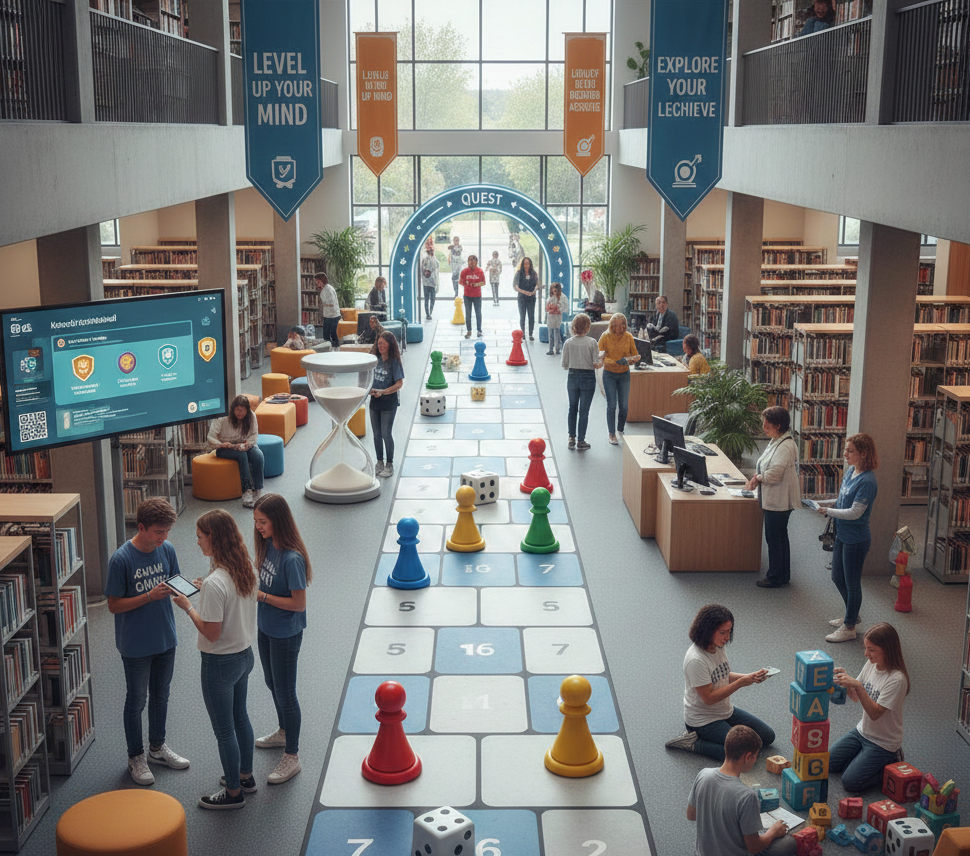
Becoming familiar with the module will provide the trainees with knowledge how to apply gamification techniques in library training sessions in information and media literacy for different categories of users and in activities promoting library collections, resources and services. Getting acquainted with the educational games and tools described in the module will allow the learners to adapt them in various library settings and for different purposes.
LEARNING OBJECTIVES
● analysing the characteristics of educational games applicable in a library environment in the context of the changed requirements to the information and media literacy skills of library users and according to the pedagogical theories for active learning
● experimenting with popular information literacy games, media literacy games, library promotion and library orientation games
● examining platforms, resources and projects related to game-based learning in libraries or gamification of library services and training sessions
● defining suitable approaches to games and gamification according to the needs of different categories of library users
LEARNING OUTCOMES
● possess detailed knowledge of resources and projects about game-based learning and gamification in libraries
● adapt educational games for promoting library services and resources
● tailor new games according to the library collections and profile
● apply games and gamification approaches for different categories of library users
The following elements can be included in it: and author
- Type of game, e.g. Board Game / Card Game*
- Title and author
- Introduction
- Target group
- Information literacy standards addressed by the game (optional)**
- Objectives of the game
- Basis of the game
- Time needed to implement the game
- Materials and equipment
- Preparation
- Implementation of the game
- Assessment methods
- Delivery method
• Mode: In-person / Online / Blended
• Individual or Group-Based
• Synchronous or Asynchronous
- Kursu reģistrētājs: Ioana Crihana
- Kursu reģistrētājs: Marina Encheva
- Kursu reģistrētājs: Emmanouel Garoufallou
- Kursu reģistrētājs: Dragos Adrian Neagu
- Kursu reģistrētājs: Hlias Nitso
- Kursu reģistrētājs: Agnese Pasane
- Kursu reģistrētājs: Chrysanthi Theodoridou